The idea of the territory of Barcelona through its representation
The aim of this article is to describe the tools that have been central to the planning of the Metropolitan Area so far, in order to understand the current state of the art in order to envision future transformations. Unlike other efforts to tell the history of Barcelona, or to draw conclusions about the “Barcelona Model”, this article is based on the hypothesis that the tools of representation we use condition our gaze and, therefore, our results. Through the analysis and comparison of a series of graphic representations, the article focuses on particular moments in the history of the metropolitan territory of Barcelona in which urban planning has been deeply influenced by the design tools being used, from topographic representations to big data.
Related links
linkhttps://upcommons.upc.edu/handle/2117/91363
Guest post in the Open Data Institute news
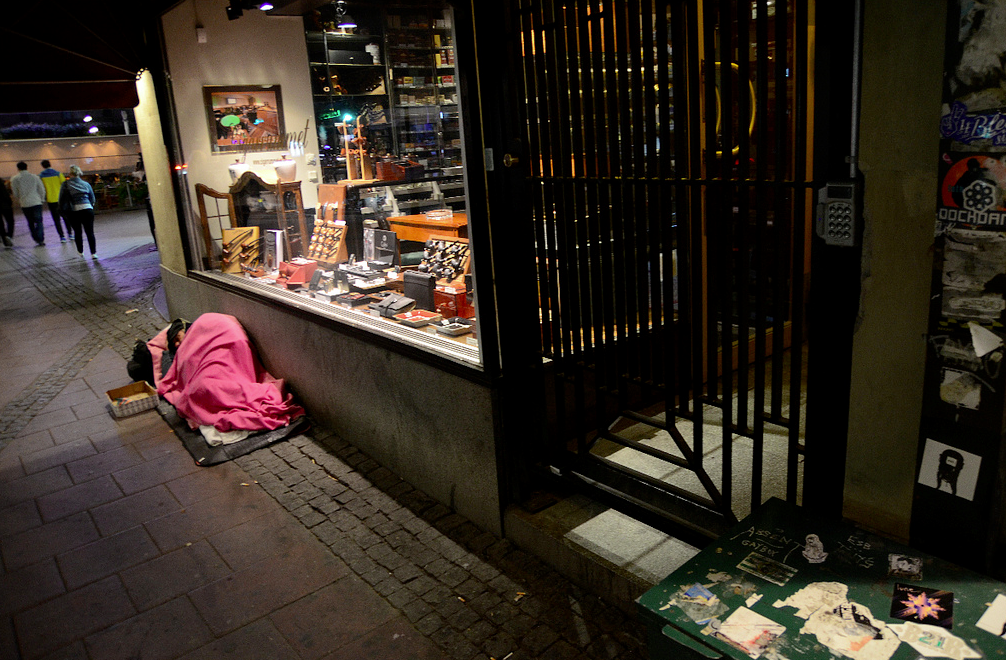
In response to the nomination of the Open Papers project for the Open Data Institute awards (a global benchmark organization in the field of open data and information transparency), this article reflects on the potential of hybrid analog-digital tools to improve large-scale data collection processes, helping to combat homelessness and social exclusion in cities.
Related links
linkhttps://theodi.org/article/guest-post-how-can-gathering-data-help-curb-social-exclusion/
Paper in the 2018 ACSA Conference Proceedings
The knowledge economy is transforming our cities. The return of large companies’ headquarters to city centers and the proliferation of innovation districts in metropolises around the world represent a paradigm change. Today, scientific literature focuses on the metrics of innovative activity from the point of view of human capital and creative workers, global economic indicators, company characteristics, scientific production or urban implantation. However, there is a lack of research demonstrating that the knowledge economy has its own urban form that depends in the characteristics of the site – innovation activities are more likely to emerge in specific urban conditions. This paper aims to frame the emergence of innovative urban economy in an international context and describe a case study in the Barcelona metropolitan area, in line with the aforementioned hypothesis. Place matters in the leverage of innovation.
Related links
linkhttps://www.acsa-arch.org/chapter/how-the-knowledge-economy-is-transforming-the-city-from-the-inside/
Paper in the 2018 ACSA Conference Proceedings
The regulation of economic activity is a question of the utmost relevance in urban planning as urbanism meants to support coexistence of citizens necessities while preserving the health of the commercial economic fabric. In this context, the model of diversity embodied by the city of Barcelona (paradigm of other European cities where commercial and leisure activities play a fundamental role in constructing the social, civic and economic values) is under discussion from the urban and political perspective. The saturation of public access activities, food retailers and tourist services -consequence of previous boosting liberal policies- is affecting the habitability and the quality of life of the residents. Using the new land-use plan of Ciutat Vella (Barcelona, Spain, 2018) as a case study, we intend to frame the regulation of public access and commercial activities in an international context, explain how this particular type of plan works and discuss the circumstances of its implementation.
Related links
linkhttps://www.acsa-arch.org/proceedings/International%20Proceedings/ACSA.Intl.2018/ACSA.Intl.2018.5.pdf
Article in "Night studies" book
This article (included in one of the most recent reference publications in the field of “night studies”) deals with the relationship between the nocturnal landscape and the role of public space, offering two key contributions. Initially, we propose a novel methodological approach to measuring nighttime activity in cities through the introduction of different sources of dynamic data (big data and satellite imagery) along with tailored data-mining techniques to extract knowledge that can contribute to nocturnal urban design and planning.
Second, we propose a case study based on the city of Barcelona, replicable in other urban contexts with similar data structure maturity levels. This example helps us understand how public space is used at different times of day and how that use is tied to energy, elements of memory, visual structures or the regulation of public lighting.
Related links
linkhttps://www.researchgate.net/publication/340916198_Geographies_of_the_night_From_geographical_object_to_Night_Studies
Images
Is it possible to measure the habitability of a street?
Article in Paisaje Transversal blog explaining the project Mercè.
Related links
linkhttps://paisajetransversal.org/2021/03/medir-la-habitabilidad-de-una-calle-experimento-ciencia-ciudadana-urbanimo-merce-barcelona/