Innovation metrics are essential for evaluating public policies
Innovation metrics are indispensable for assessing the effectiveness of public policies that promote innovation. For many years, tools such as the Regional Innovation Scoreboard (RIS) have provided a consistent framework for measuring and comparing innovation performance across European regions at the NUTS 2 level.
However, these tools have important limitations. They cannot be applied at a finer territorial scale to capture the complexity of functional regions, nor do they adequately reflect the characteristics of intermediate regions—those that are not innovation leaders but are making significant efforts to improve their performance.
A new territorial unit of analysis
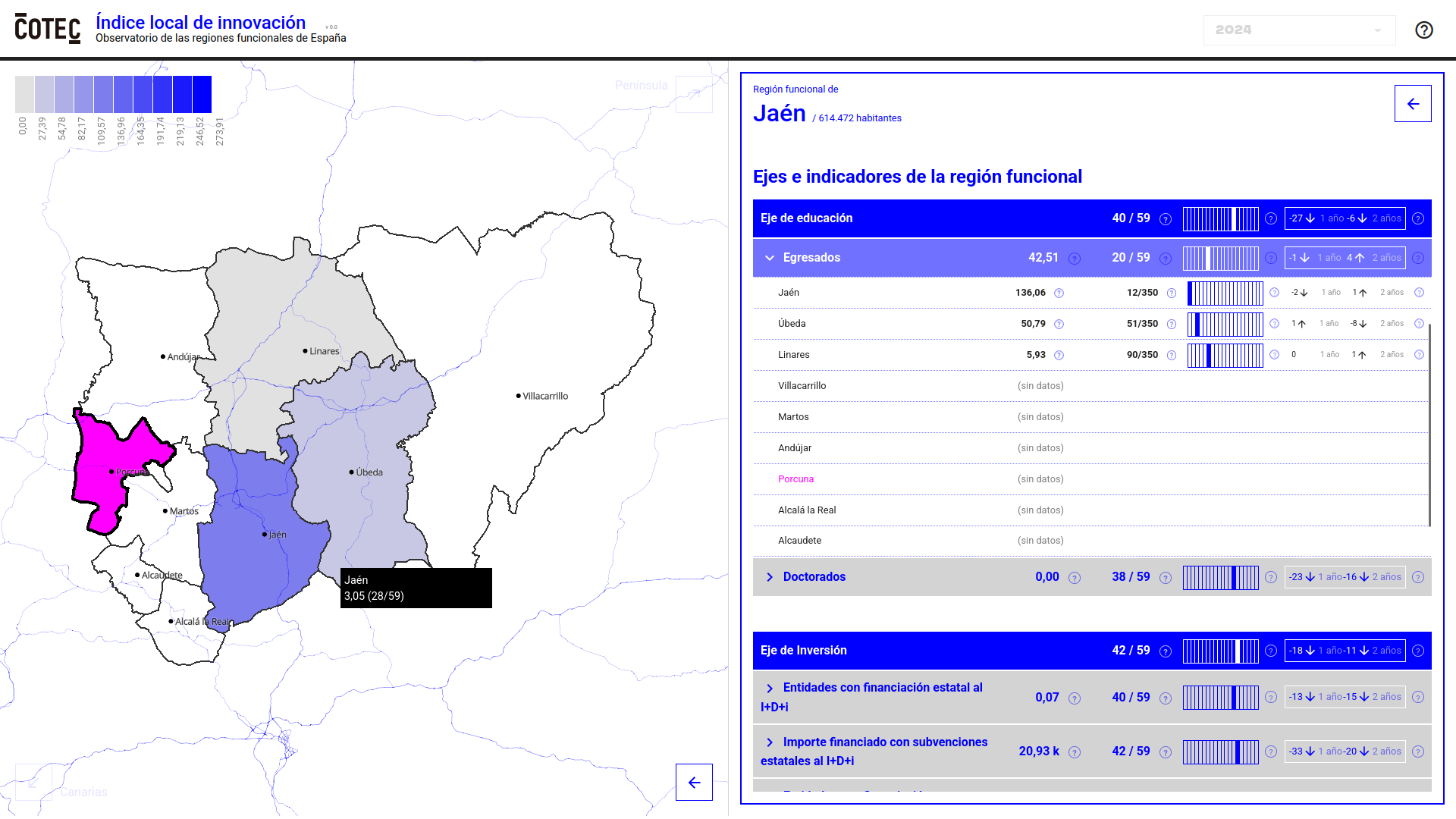
Administrative boundaries, on which most official statistics are based, do not accurately represent how places collaborate, share services, or compete. To better understand these dynamics, the project introduces a new territorial regionalization that groups areas according to functional relationships rather than administrative borders.
This approach allows meaningful comparisons between metropolitan areas such as Madrid, Barcelona, and Zaragoza—not because they have similar populations or urban density, but because they form equivalent functional labour markets defined by comparable mobility patterns. These relationships have been identified using anonymized mobile phone network data.
Integrating COTEC’s research
Over the years, Fundación COTEC has developed and continuously refined its own innovation indicators to address dimensions of innovation that remain poorly captured by existing statistics. Until now, these indicators have been available primarily at the city level.
The project aggregates these metrics into the new territorial framework, enabling them to describe innovation performance consistently across functional regions rather than administrative units.
Incorporating new data sources
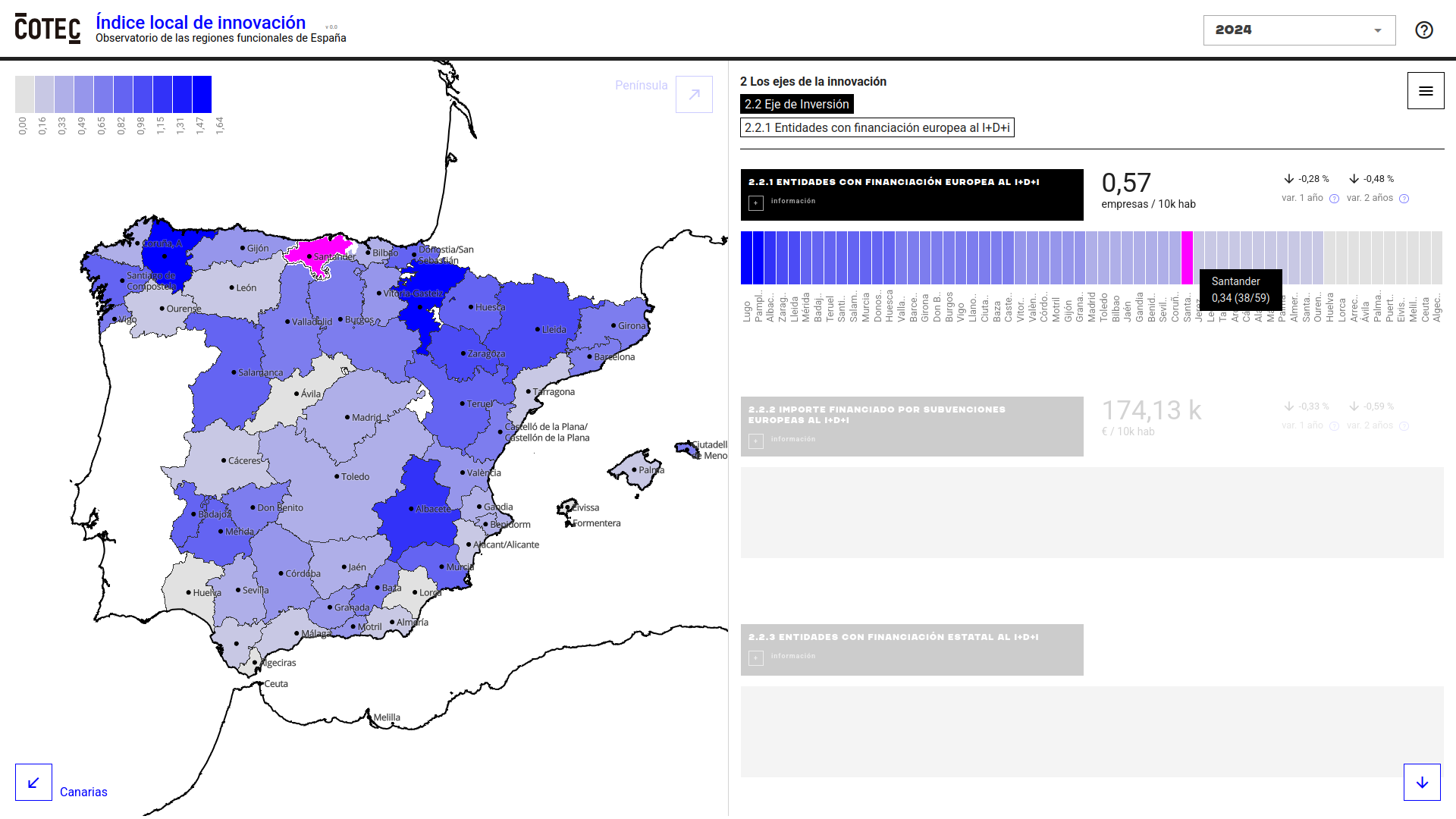
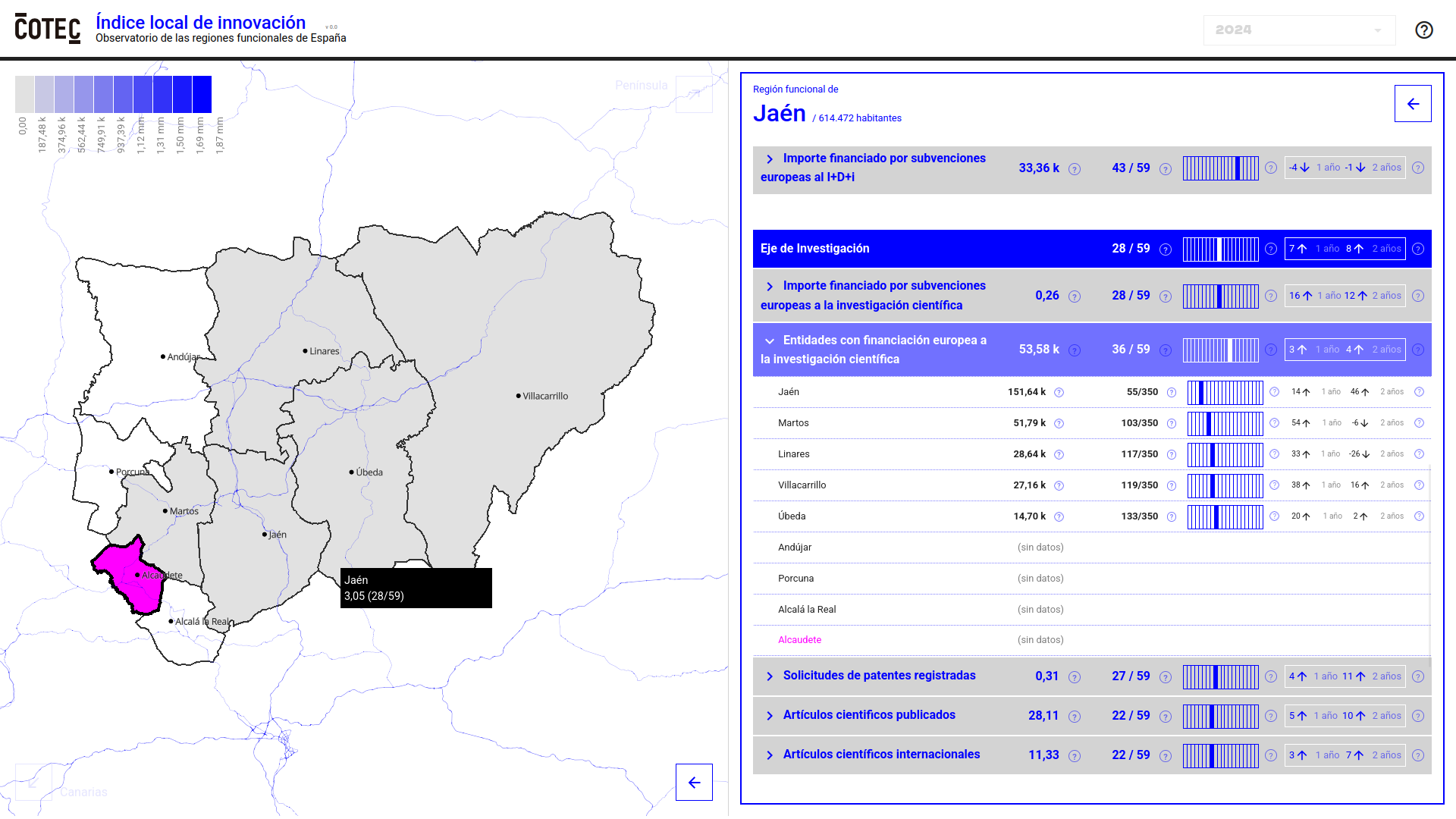
The platform also integrates new sources of information, including patents, scientific publications, and European research funding. Working closely with data providers, these datasets are geolocated, analysed, and incorporated into a unified territorial model.
Measuring innovation performance
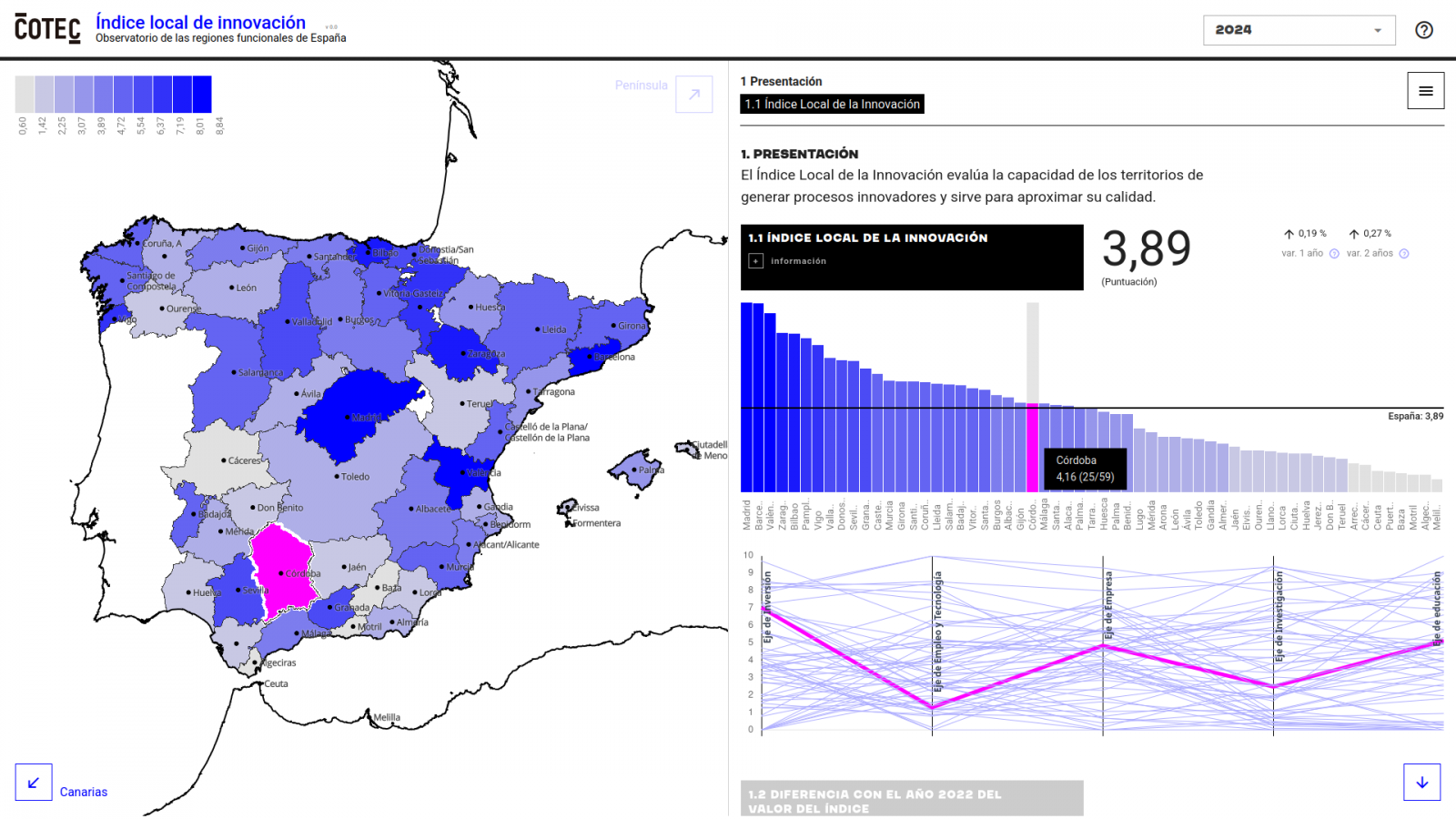
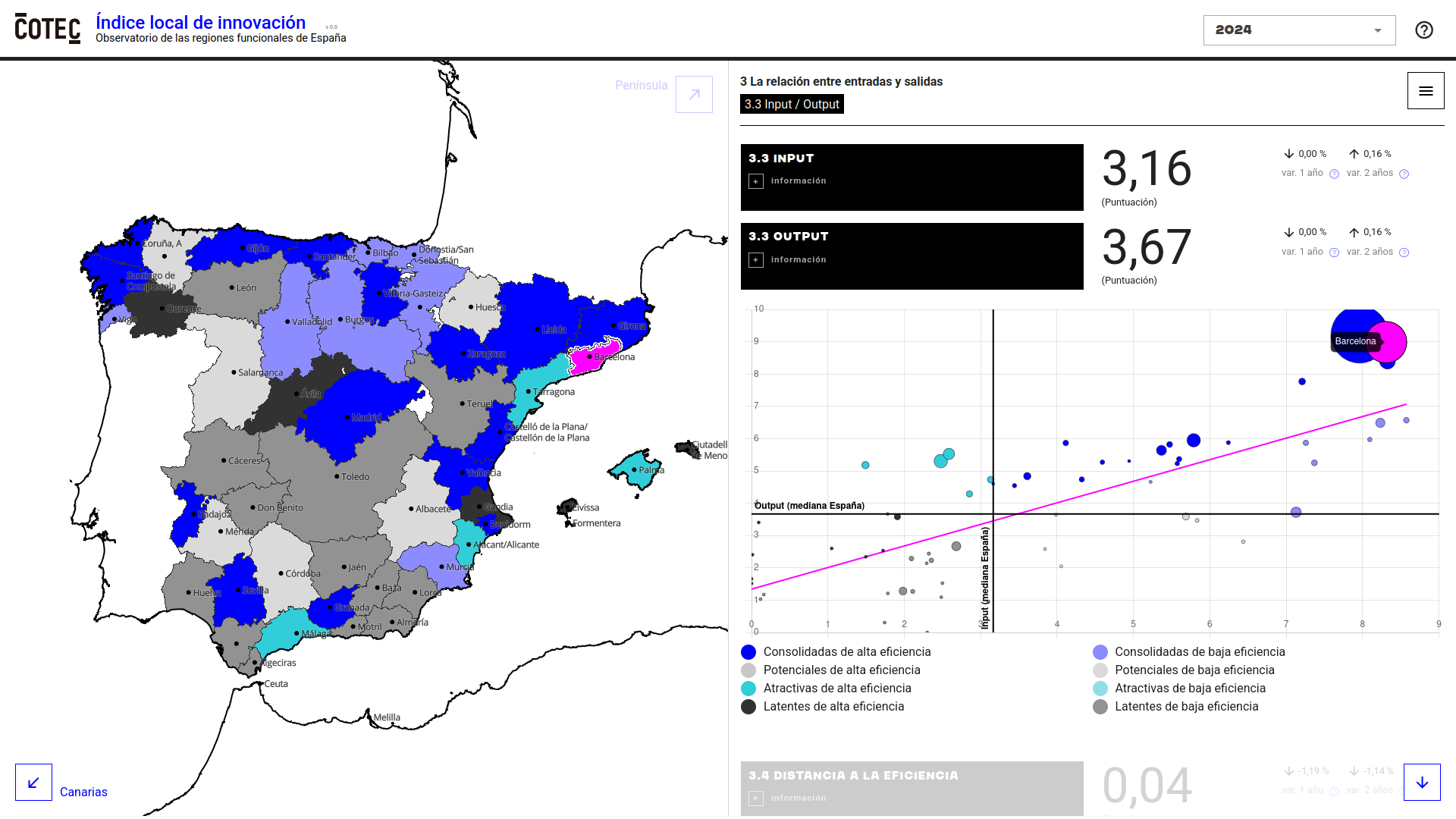
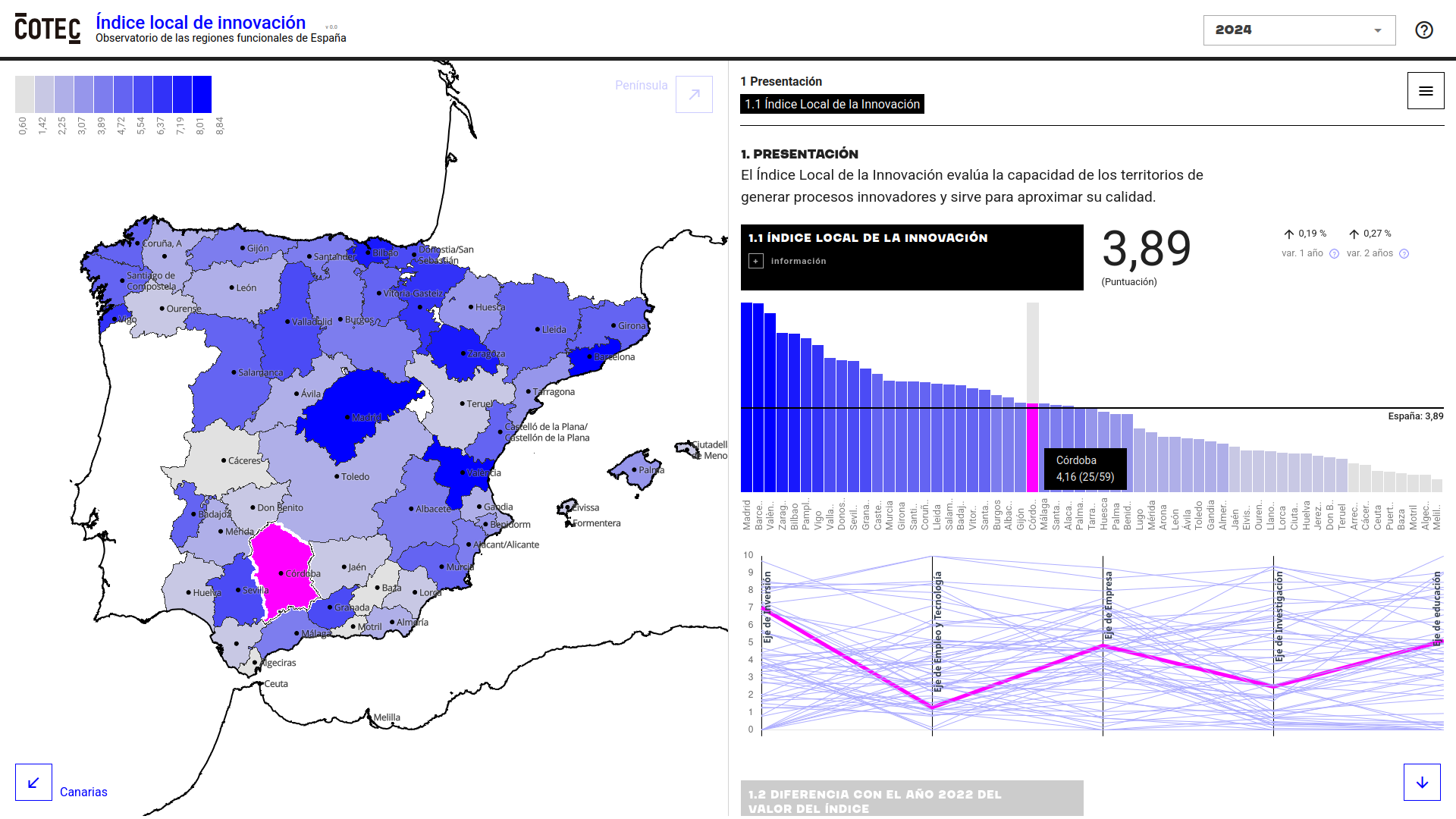
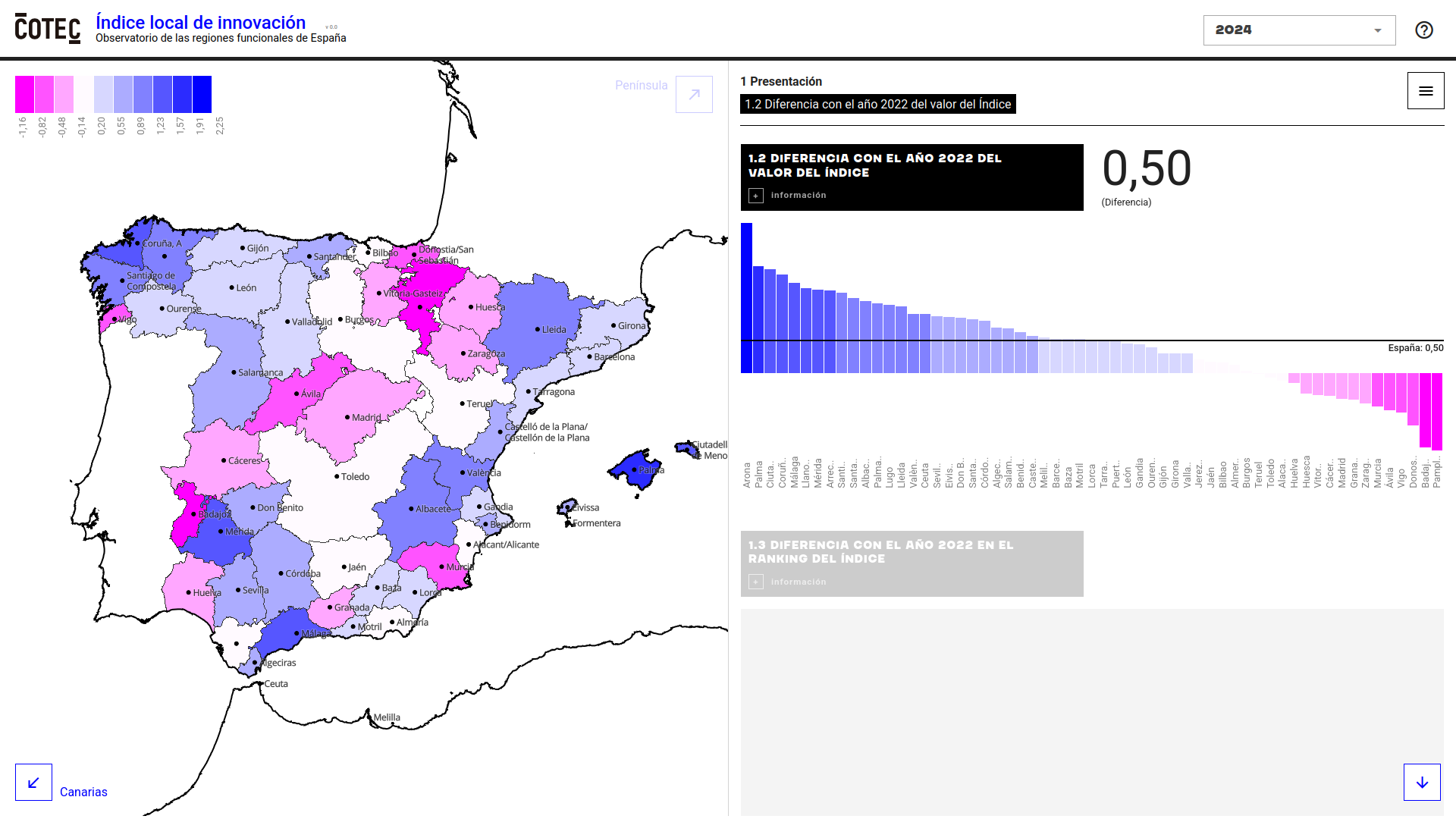
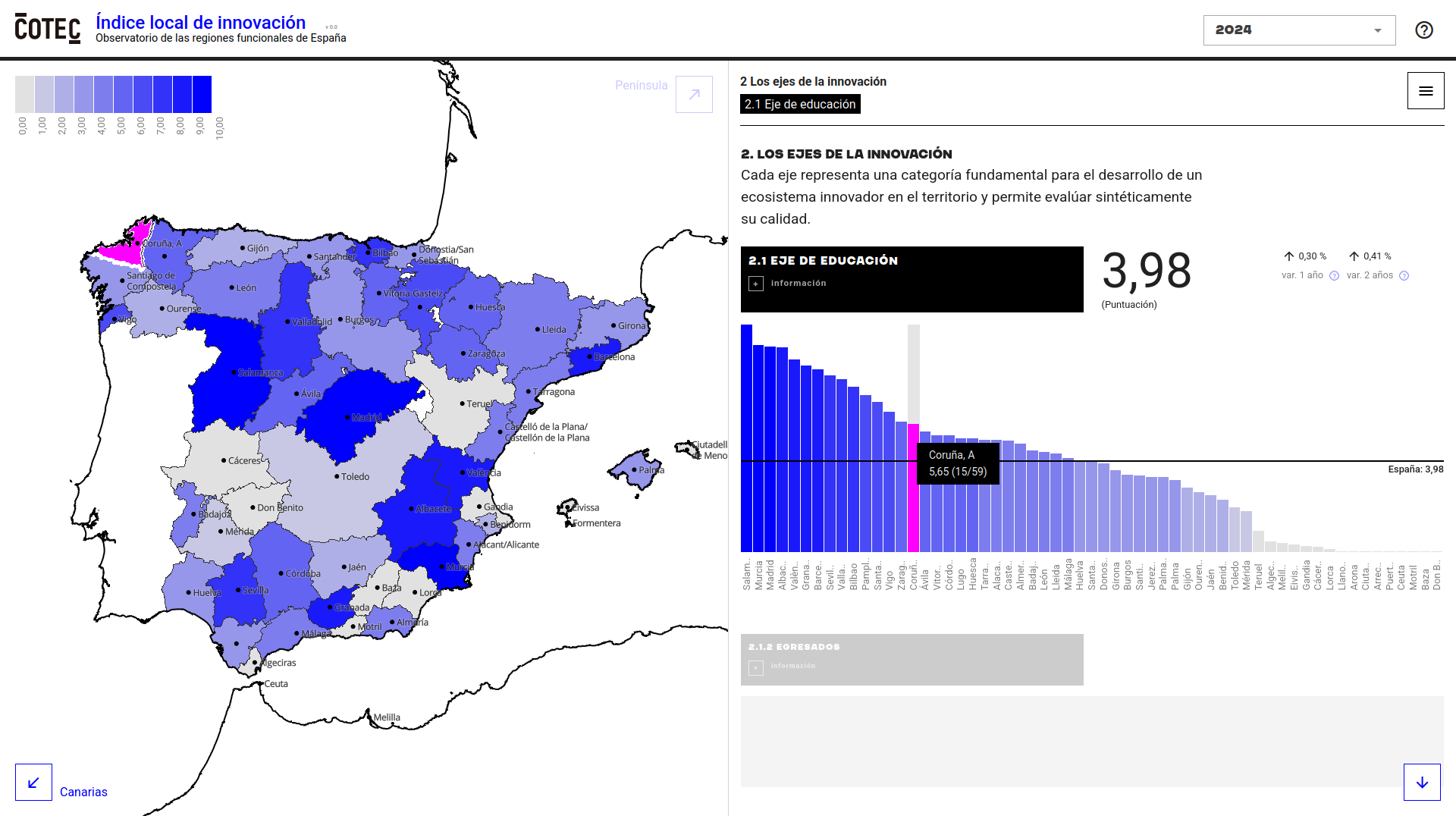
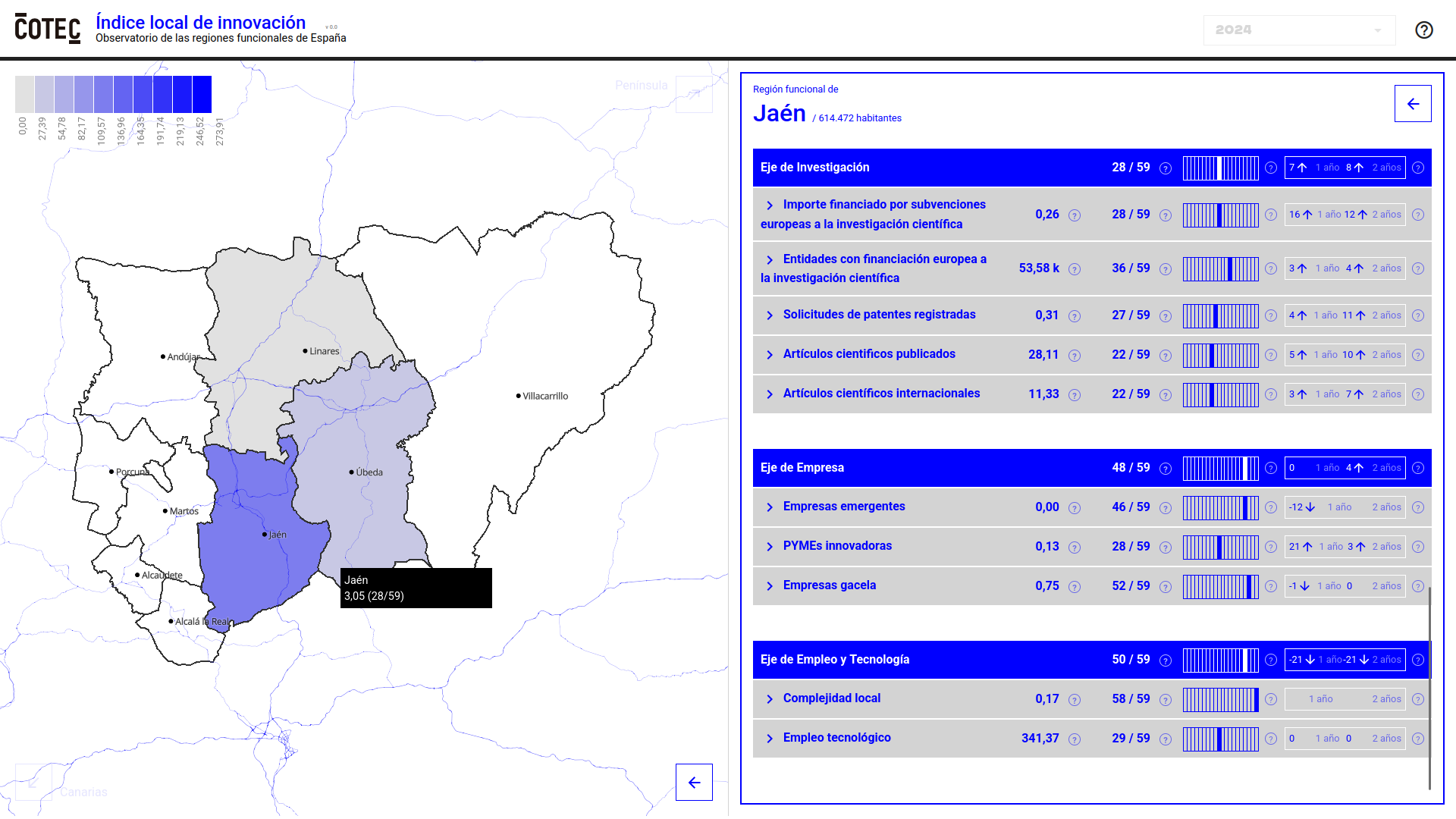
The resulting indicators are combined to produce a composite innovation index that monitors the evolution of innovation across the country. At the same time, the indicators are organised into complementary dimensions, distinguishing innovation inputs from outputs, and efforts from results.
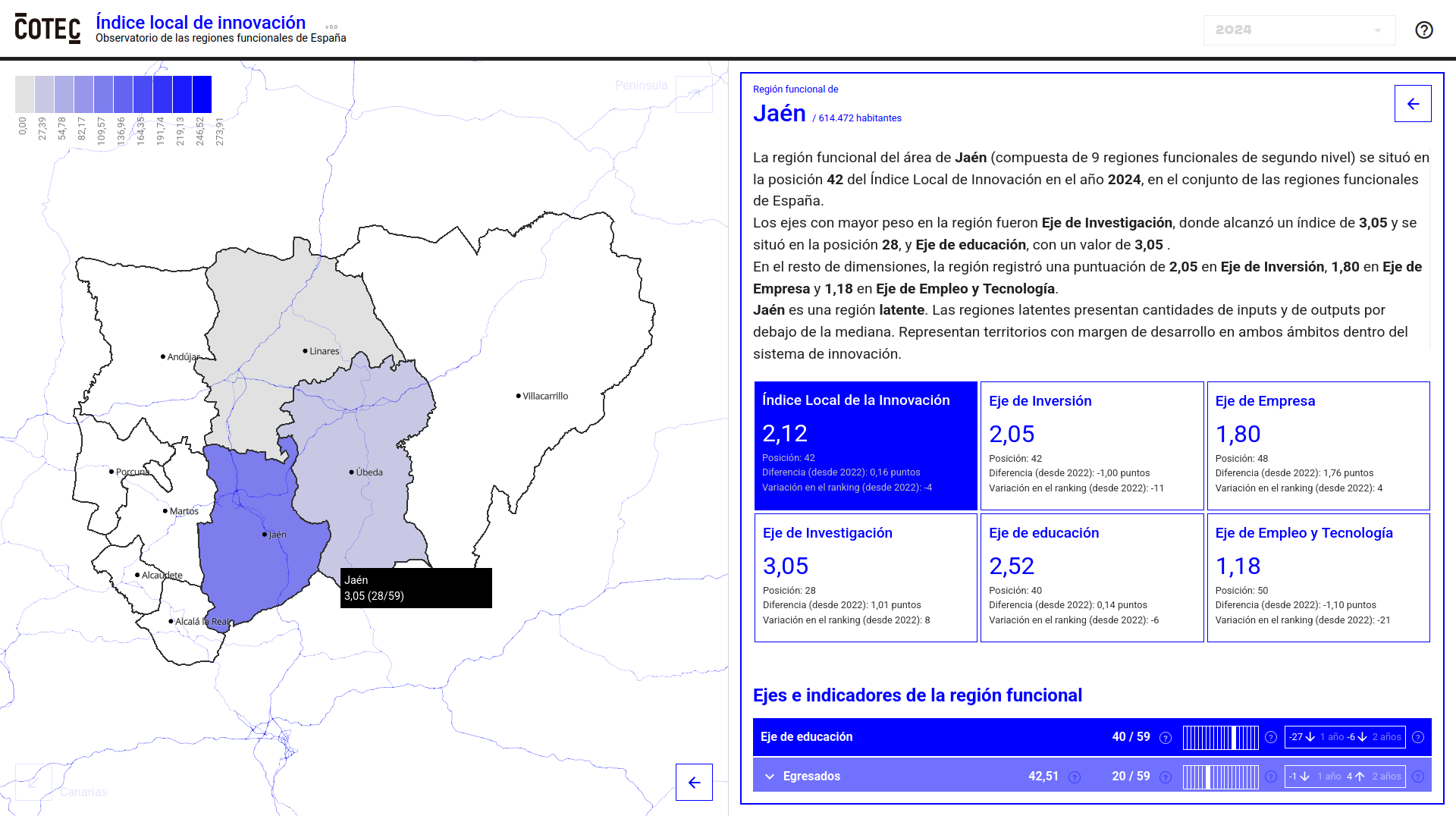
This framework makes it possible to assess the performance of each region, identify its strengths and weaknesses, and provide a more accurate diagnosis of its innovation trajectory, helping policymakers and stakeholders design strategies to strengthen and sustain innovation over time.
An open platform for innovation
All of these data and analyses are brought together in an open online platform designed to make innovation intelligence accessible to citizens, public administrations, researchers, and other stakeholders.
By providing free access to reliable, territorialised evidence, the platform aims to support better decision-making and encourage knowledge-based initiatives that generate lasting social and economic value.
Images
Promoters
