Moving towards another urban model
In the immediate context of the end of the lockdown in response to the first wave of Covid-19, this article reflects on the need for changes to the urban and territorial model (based on the concepts of distance and density that have emerged in their different dimensions as a result of the pandemic) and how the city should transition from impacting citizens’ health to serving as an infrastructure of collective health.
Related links
linkhttps://issuu.com/urbinfo/docs/ui289si_copertina_indice_presentazione_preview
Related projects
Mapping the city from home
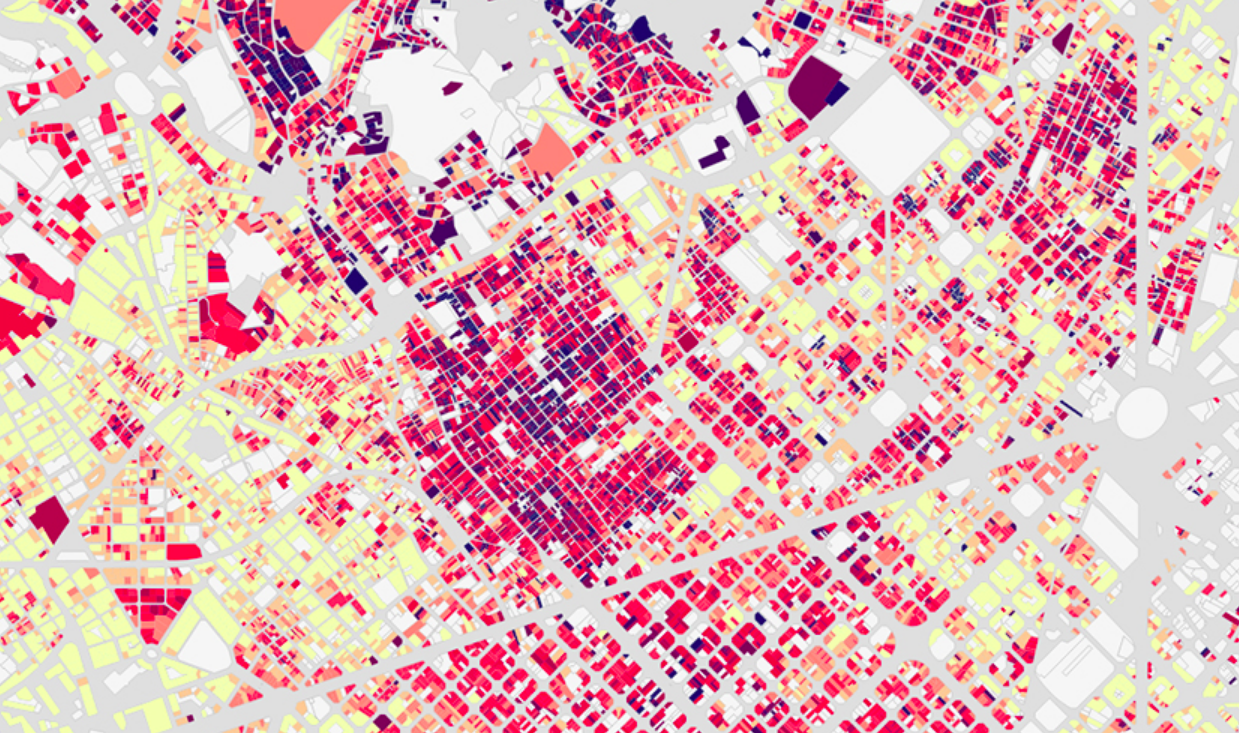
A series of 13 maps illustrates the inequality of living conditions in Barcelona during the strict lockdown of the Covid-19 pandemic. This initial description of the housing stock – based on public but also partially private data – is a first step in reflecting on the role of housing to guarantee spatial justice and social integration through urbanism.
Related links
linkhttps://www.mascontext.com/observations/geographies-of-the-lockdown-in-barcelona-mapping-the-city-from-home/
Related projects
Urban views: new tools to redraw the city
Contemporary landscapes evoke, now more than ever, images of urban environments made up of streets and corners, walls and gardens, monuments and shops. A wide range of things urban areas set the stage for the metropolitan life from central public spaces to peri-urban enclaus, passing through invisible nodes and networks, non-places and landscapes in transformation. Faced with this growing complexity of the urban fact, what instruments do we have architects to measure, understand, plan and build the city and the territory?
Related links
linkhttps://futur.upc.edu/13019701
Cartographies of nightscapes using the Big Data
atNight project has been featured in Volume 6 of Obra Digital. Obra Digital is an international open access journal focusing on research in Digital Communication from a broad perspective. This issue ‘Narratives and Digital Design’ offers a miscellany of articles featuring digital content from different angles: the display of cartographic design and artificial spaces, the construction of narrative and the production of video game.
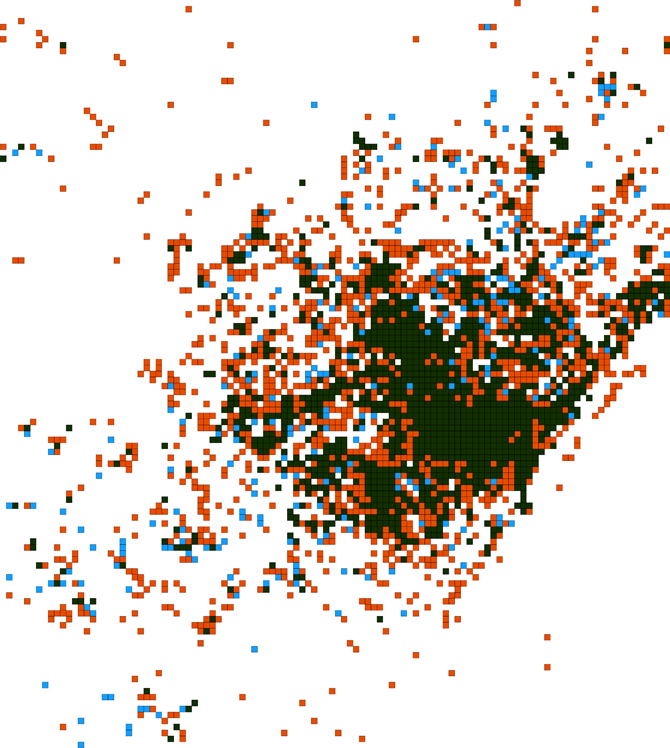
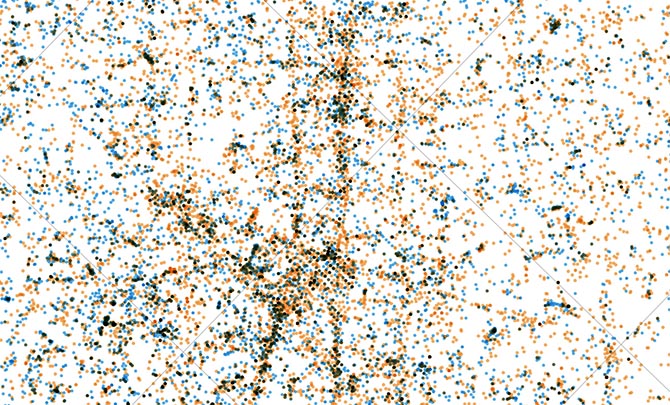
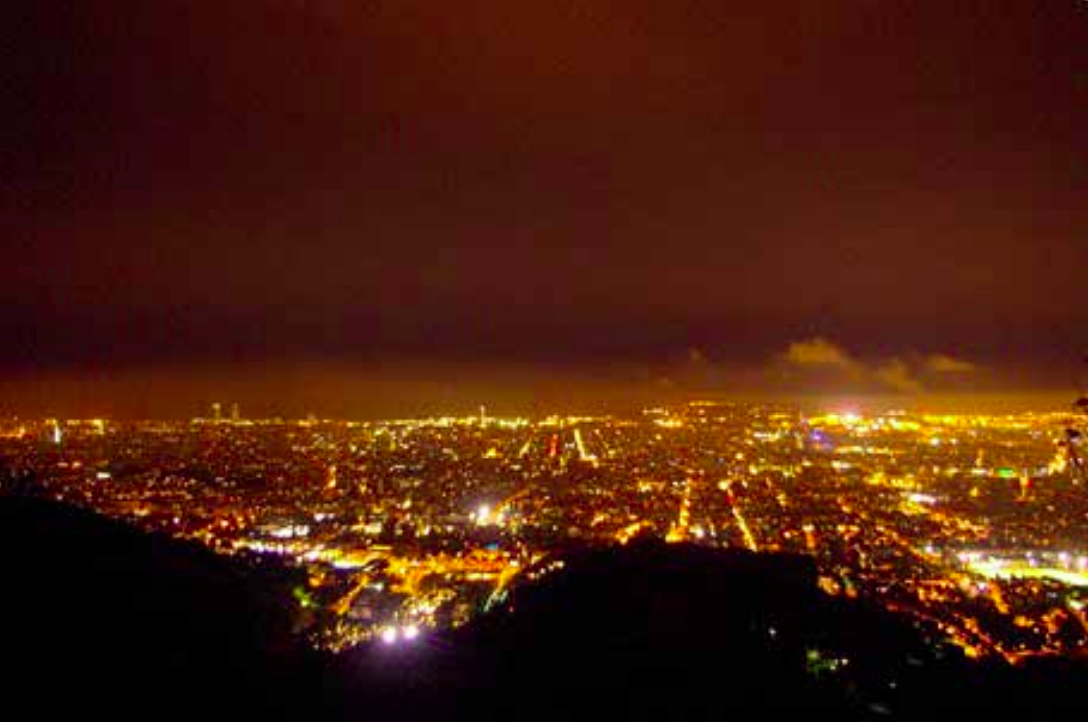
Data visualization has emerged as a key tool in the thinking of urban design used to explain the relationship between citizens and their environment. The article ‘Cartographies of nightscapes using the Big Data’ explores the potential of techniques representing the city image by developing digital cartographies that enable us to assign geometry to this large volume of data. atNight project uses data analysis and visualization to propose a possible interpretation of urban nightscape.
Related links
linkhttp://revistesdigitals.uvic.cat/index.php/obradigital/article/view/41/42
Strengthening the link between heritage and society through Representation
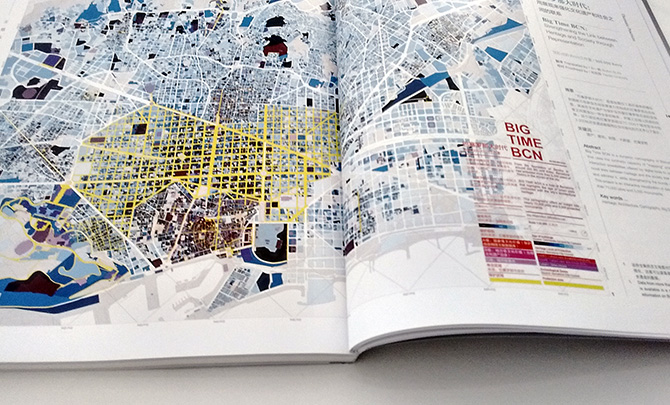
The paper ‘Big Time BCN: Strengthening the Link between Heritage and Society through Representation’ explores how the use of tools such as Big Time Bcn can articulate the relationship between heritage and citizenship. We need new mechanisms to facilitate spreading knowledge about heritage, involving citizenship in cataloguing and other processes of identification.
The article has been published in Landscape Architecture Frontiers volume 2 (issue 6) under the topic Archaeology and Landscape Architecture. LAF is a Chinese review that puts its focus on the intersecting spheres of academic research and design practice in landscape architecture.
Related links
linkhttp://www.landscape.cn/interactive/book/books/2015/0206/172639.html
Related projects
Issue on "Data Driven Cities"
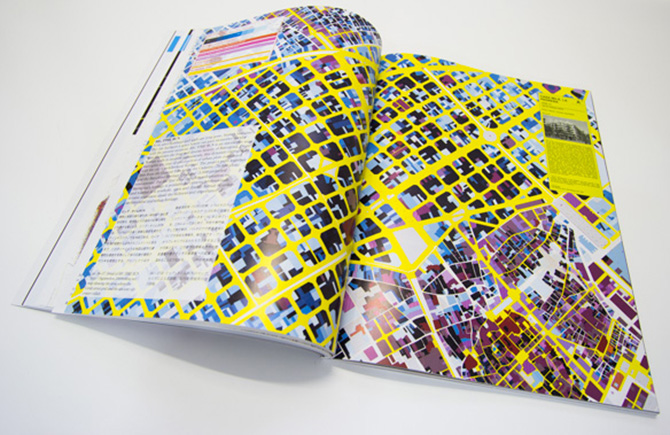
November 2014 issue of A+U Architecture and Urbanism explores the work of architects, urban designers, software developers, artists, researchers who are leading with a range of technological drivers reforming urbanity. Edited by Alastair Townsend, the issue includes essays by Eric Fischer, Eric Rodenbeck (Stamen), Carlo Ratti (MIT) and Tim Stonor (Space Syntax) among others.
Under the name of Unveiling Intangible Barcelona, our contribution presents atNight and Big Time Bcn. Both projects deal with the representation of intangible values either by mapping day and night citizens’ interactions or by plotting into an interactive map the whole of the city’s heritage.
Related links
linkhttps://au-magazine.com/
Related projects
Chapter in the book "New Challenges for Data design"
Springer published the book New Challenges for Data design edited by David Bihanic. The publication outlines the scope of Data Design, and presents a line-up of “viewpoints” that highlight this discipline’s main topics, and offers an in-depth look into practices boasting both foresight and imagination.
The book includes contributions from Alberto Cairo, Giorgia Lupi, Fabien Girardin, Nicholas Felton, Moritz Stefaner and Benjamin Wiederkehr among others. We participate in the book with the chapter “atnight: Nocturnal Landscapes and Invisible Networks”, included in in the section Mapping and Data Visualization.
The chapter presents in detail the methodology and the main contributions of atNight project. We evaluate the potential of digital technologies to propose new design scenarios aiming at deploying strategies to gather, analyse and represent information. Specifically, we use data visualization to establish a possible interpretation of nocturnal landscape.”
Related links
linkhttps://books.google.es/books?id=BrTzBQAAQBAJ&lpg=PA405&ots=scfE_IoXpS&dq=New%20Challenges%20for%20Data%20design%20edited%20by%20David%20Bihanic&hl=es&pg=PA43#v=onepage&q=New%20Challenges%20for%20Data%20design%20edited%20by%20David%20Bihanic&f=false
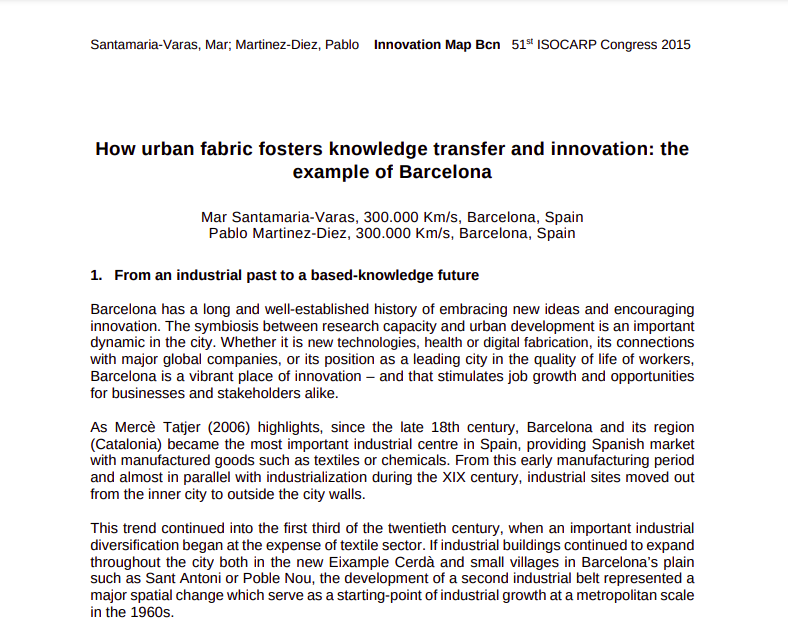
51st ISOCARP Congress 2015
The knowledge economy is transforming our cities. There has been a paradigm shift, seen in the return of corporate headquarters to urban centers and the proliferation of innovation districts in metropolises round the world. Today, the scientific literature is focused on the metrics of innovation activities from the point of view of human capital and the creative workforce, global economic indicators, companies’ characteristics, scientific production, and how they fit into the urban fabric. However, there is a lack of research that reveals how the knowledge economy has its own urban form, which depends on the characteristics of each place – how innovation activities are more likely to emerge given specific urban conditions. This article aims to situate the emergence of the innovative urban economy in an international context and describe a case study from the metropolitan area of Barcelona, in keeping with the aforementioned hypothesis.
Related links
linkhttps://www.eventure-online.com/parthen-uploads/95/15ROT/add_1_270030_BHwGFjmHYm.pdf
51st ISOCARP Congress 2015
The International Society of Urban Planners conference (ISOCARP) took place in parallel in different Dutch cities, following a theme proposed by each of the participating municipalities. In Eindhoven (known for its connections to the multinational Philips), the issue of the night landscape was put forward as a collective project requiring attention. The aim was to collect new participatory design scenarios halfway between traditional top-down planning and novel bottom-up strategies. Before describing the results of the atNight project, this article examines a series of participation processes carried out in Barcelona, which served as the starting point for building a new working method.
Related links
linkhttps://www.eventure-online.com/parthen-uploads/95/15ROT/add_1_270033_aJR1XAxRFW.pdf